Autor: uerati

  • Caso 38

    Me dedico a desmentir hechos sobrenaturales.

    Durante años he visto de todo:
    fantasmas en casas embrujadas,
    pinturas malditas,
    cuevas llenas de voces que susurran,
    criaturas mitológicas
    y variaciones cada vez más elaboradas del mismo engaño.

    Nada de eso resiste observación prolongada.

    Pero hay algo que la gente se niega a soltar:
    los milagros.

    He desacreditado treinta y siete.
    Más de la mitad parecían no tener explicación.
    Los devotos los usan para llenar vacíos,
    para sostener la idea
    de que existe algo superior
    observándolos.

    Entre todos esos casos
    hay uno que decidí archivar aparte.

    No porque sea más complejo,
    sino porque es el más aceptado:

    el amor.

    Para desacreditarlo necesito evidencia.
    Y la evidencia abunda.

    He visto manos temblar
    como si ocultaran algo.

    Ojos a punto de derramarse
    sin que exista herida visible.

    Sonrisas nerviosas,
    actos de bondad que se extienden demasiado,
    conductas que imitan lo sagrado
    con una precisión inquietante.

    He escuchado promesas elevarse,
    hincharse,
    deformarse en el aire
    hasta perder toda forma reconocible.

    He visto palabras repetirse tanto
    que terminan por vaciarse.

    He documentado latidos acelerados
    atribuibles al miedo,
    silencios que no contienen paz
    sino cálculo,
    abrazos que se desgastan
    cuando se repiten demasiado.

    He registrado coincidencias improbables:
    dos cuerpos que se inclinan al mismo tiempo,
    dos voces que se quiebran en la misma sílaba,
    dos historias que comienzan igual
    y terminan contradiciéndose.

    He visto cómo se construyen las certezas:
    lentas,
    frágiles,
    dependientes de la mirada del otro.

    He llamado reflejo a la ternura,
    dependencia a la compañía,
    síntoma a la permanencia.

    He reducido incendios a química,
    la espera a una distorsión del tiempo,
    los nombres repetidos en la mente
    a una forma leve de obsesión.

    He visto lo que ocurre después:

    rupturas que dejan residuos,
    personas que pierden el sueño,
    la concentración,
    el apetito,
    la fe,
    la voluntad.

    He visto a alguien vaciarse por completo
    sin que haya sangre.

    He visto a alguien sobrevivir
    sin que eso signifique estar vivo.

    He interrogado a los implicados.
    Ninguno admite haber mentido.
    Ninguno logra sostener su versión completa.

    Siempre hay inconsistencias:
    recuerdos alterados,
    tiempos que no encajan,
    detalles que cambian
    dependiendo de quién los diga.

    Y aun así,
    ambos insisten
    en que fue real.

    Anoche,
    después de una jornada extensa,
    decidí detener la investigación.

    No por falta de evidencia,
    sino por saturación.

    Me senté a observar.

    Fue entonces cuando ocurrió.

    Una pareja,
    a unos metros de distancia,
    intercambió un gesto mínimo.

    Nada extraordinario.

    Ningún juramento,
    ninguna manifestación evidente.

    Solo un movimiento breve,
    casi imperceptible.

    Pero suficiente.

    Algo en ese gesto
    no coincidía con el patrón.

    No respondía al miedo,
    ni a la costumbre,
    ni a la necesidad.

    No parecía cálculo.

    Por un instante
    consideré que tal vez
    había estado equivocado.

    Que quizá el amor
    sí era un milagro.

    Pero no.

    Los milagros no dejan este tipo de rastro.

    Esto…

    esto se parecía más a otra cosa.

    Abrí el expediente.
    Revisé cada caso.
    Busqué lo que todos tenían en común.

    Y lo encontré.

    El amor no comienza como un fraude.

    Comienza como una coincidencia legítima:
    dos cuerpos que se encuentran,
    dos voces que encajan,
    dos soledades que, por un momento,
    dejan de serlo.

    Eso es real.
    Eso ocurre.

    Pero con el tiempo
    algo cambia.

    Uno de los dos
    empieza a ceder más,
    a creer más,
    a quedarse más tiempo del necesario.

    Y entonces el fenómeno se deforma.

    Se inclina.

    Se convierte.

    El amor no es un milagro.

    Es un fraude que ocurre lentamente.

    Un acuerdo tácito
    donde ambos participan,
    pero solo uno
    termina pagando el costo completo.

    El otro se queda con algo:
    la experiencia,
    la certeza,
    a veces incluso nada.

    Pero uno pierde más.

    Pierde el sueño,
    la calma,
    la confianza,
    la forma en la que entendía el mundo.

    Pierde cosas que no se recuperan con el tiempo.

    Eso es lo que dicen los casos.
    Eso es lo que demuestra la evidencia.

    Pero no es
    lo único que he visto.

    También he visto lo contrario.

    He visto a alguien quedarse
    cuando todo indicaba que debía irse.

    He visto cuerpos sanar más rápido,
    personas levantarse,
    volver a hablar,
    a caminar,
    a respirar distinto
    por la presencia de alguien más.

    He visto familias sostenerse
    en condiciones imposibles.

    He visto gente sobrevivir
    gracias a algo
    que no logro medir.

    El efecto existe.

    Es real.

    Pero no es constante.
    No es transferible.
    No es eterno.

    Y eso lo vuelve imposible de probar.

    Por eso sigo investigando.

    No para desmentirlo.

    Sino para encontrar
    una forma de demostrar
    que no fue un caso aislado.

    Porque yo también lo he visto.

    Porque yo también lo he sentido.

    Y si estoy en lo correcto,
    mañana volveré a archivar
    un nuevo expediente.
    Le pondré el mismo nombre.
    No lo cerraré.
  • Arantepacua

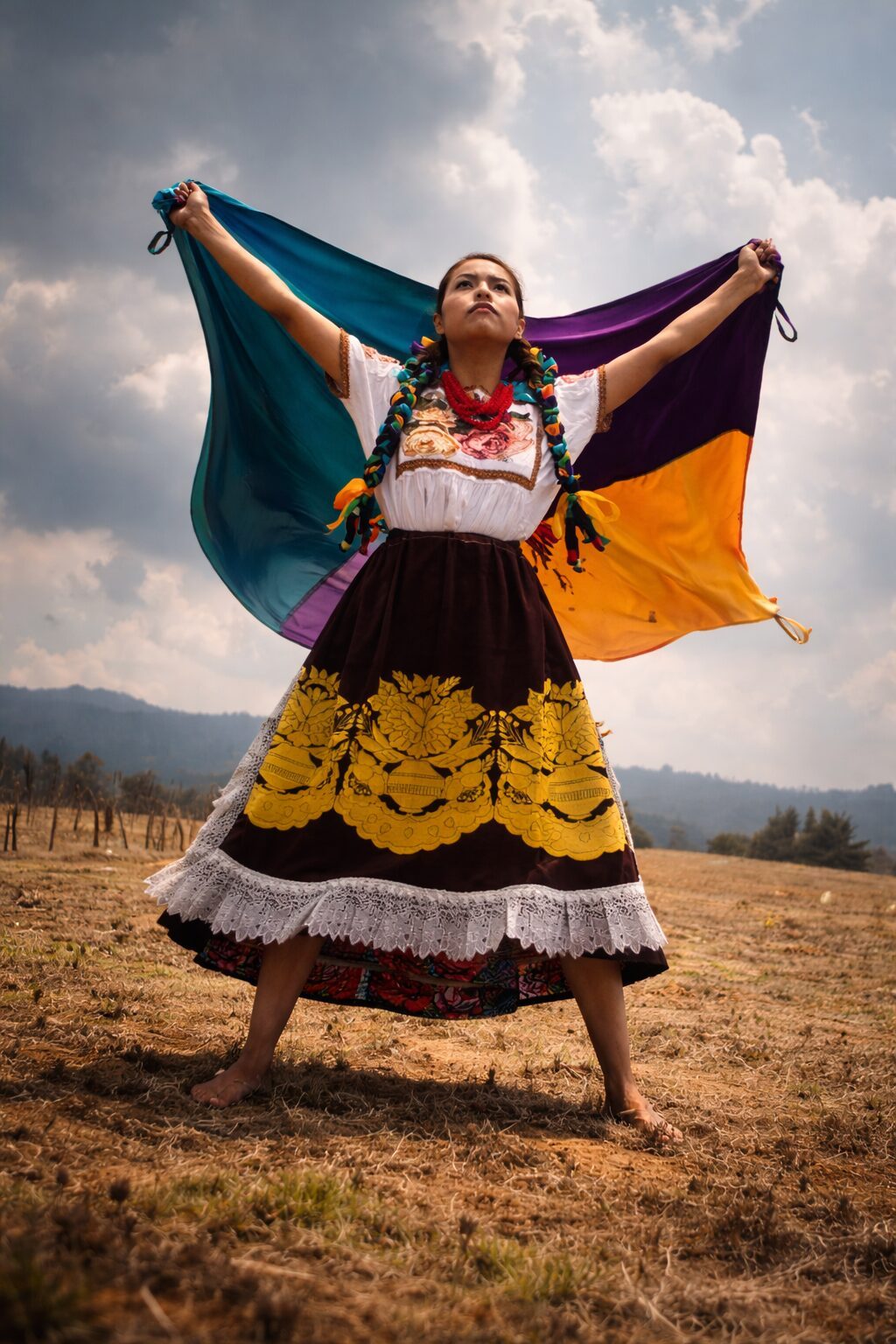
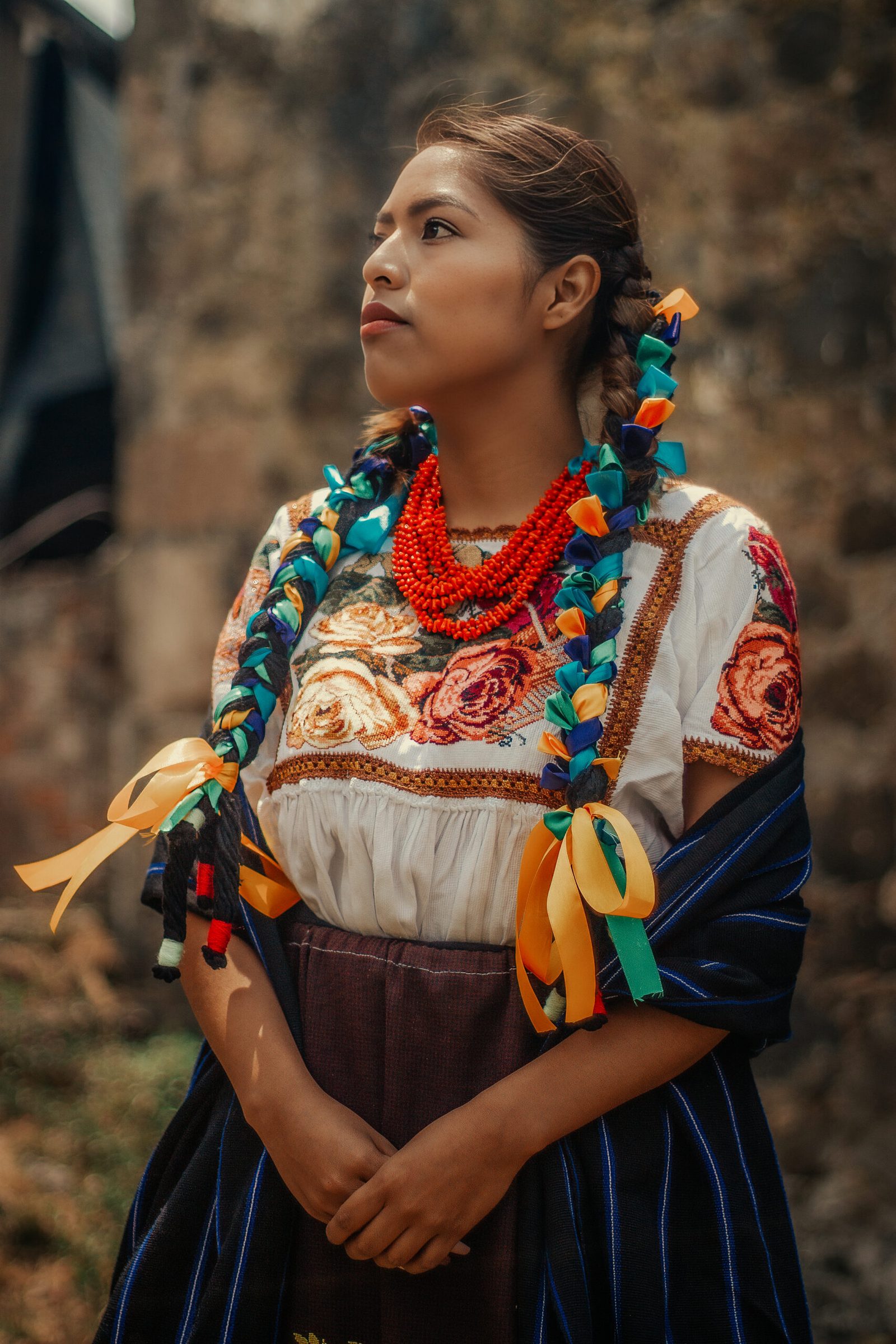
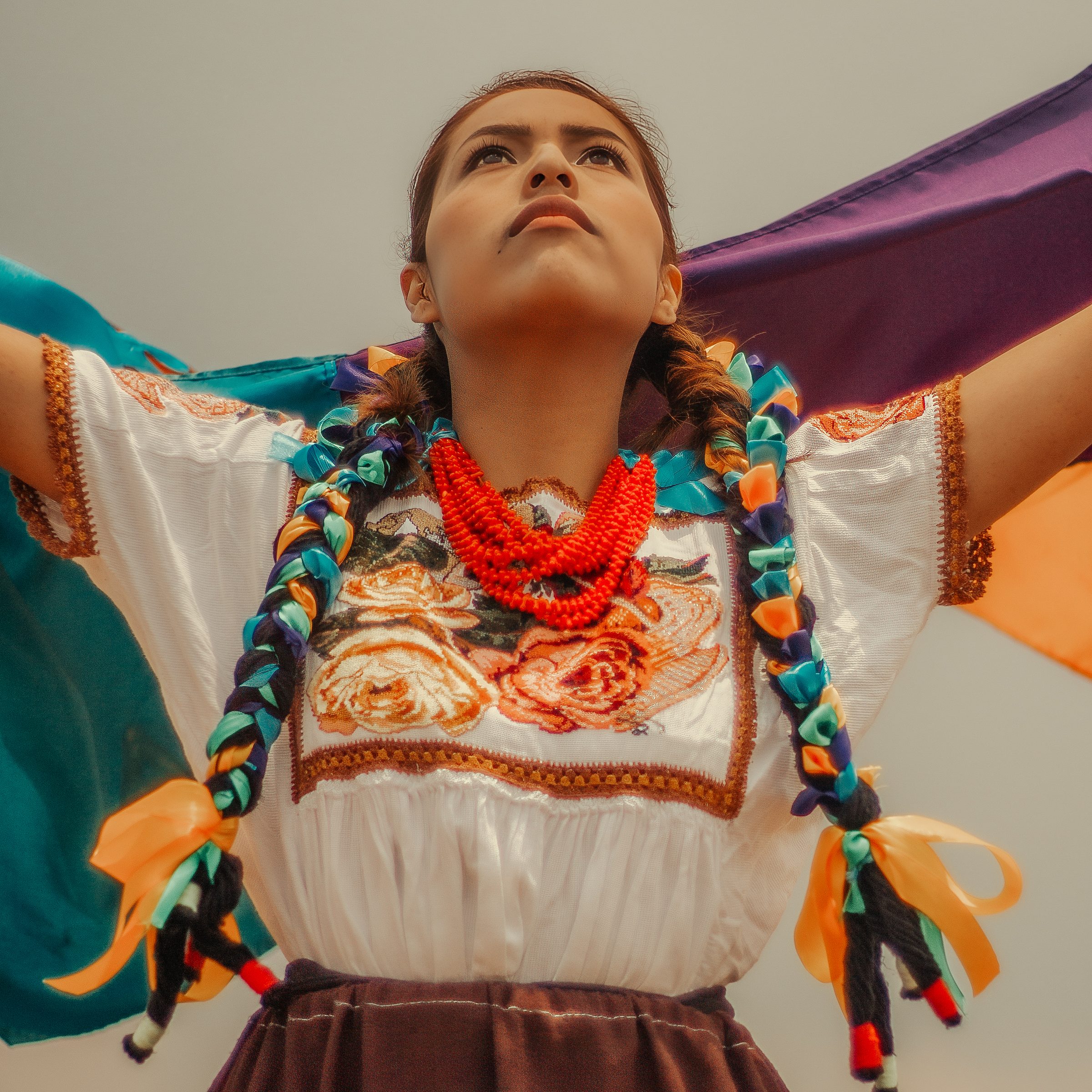
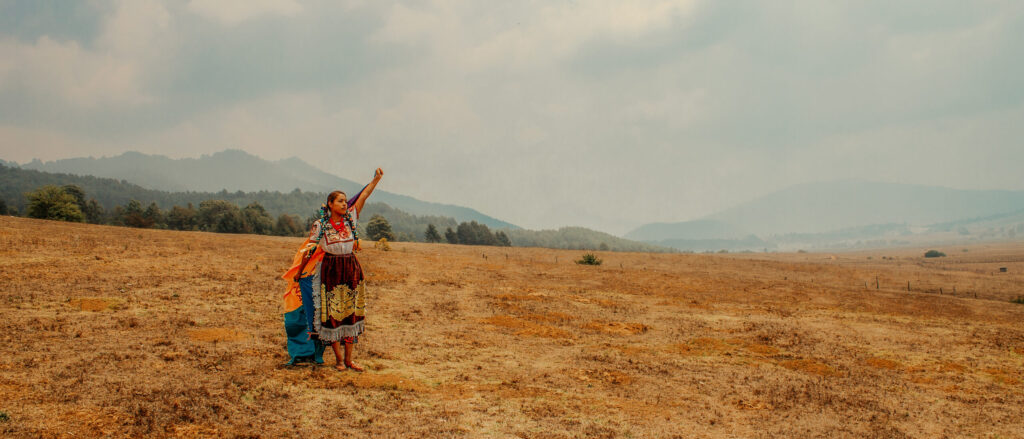
    Arantepacua, “lugar plano del Rey Aranti”, se encuentra en la Meseta Purépecha, en el municipio de Nahuatzen, Michoacán. Es una comunidad rodeada de otras localidades igualmente ricas en tradición, donde la vida cotidiana y las celebraciones mantienen vivas las prácticas culturales.

    Dentro de su vestimenta tradicional existen dos variantes principales: la ceremonial, utilizada en fiestas y ocasiones especiales, y la de uso diario, pensada para las actividades cotidianas. Cada elemento tiene un significado particular: el rebozo, por ejemplo, comunica el estado de la mujer (doblado para las jóvenes, extendido para quienes tienen un compromiso); los aretes aportan personalidad; las trenzas, adornadas con listones, enmarcan el rostro; y prendas como el guanengo bordado, la faja vistosa o el delantal reflejan dedicación y cuidado en cada detalle.

    Más que describir una vestimenta, estas imágenes buscan acercarnos a la relación viva entre identidad, territorio y memoria.

  • El sueño del comal

    Tengo un plan para esta noche:
    repetiré el sueño de hace algunos días.

    Te hallaré allá,
    en esa casa repleta de yerbas,
    sol y retratos viejos.

    Más allá del patio recién barrido
    donde algunas tercas hojas
    insisten en bailar suavemente,
                                                          estarás tú.

    Ahí en la cocina,
    junto al comal,
    torteando la masa azul.

    A tu lado una olla de café
    hará alboroto con su vaporcillo que se eleva.

    Entraré despacito,
    silbando alguna de esas melodías que suenan
    cada vez que te me acercas.

    Voy a sonreír harto,
    esperando que tú hagas lo mismo,
    que te contagies de ese gusto
    que se siente tan mío.

    Te llevaré rebozo.
    Fino, suave,
    como tu cabello, como el cielo,
    negro y añil.

    No será un regalo,
    te lo voy a cobrar,
    ¡a un beso!,
    es todo lo que vas a pagar.

    Ya me siento envuelto
    en esa tela urdida
    por manos cariñosas.

    Pero encontraré más cobijo
    en la sombra de tus brazos.

    Y ahí, acurrucado,
    me he de beber el café,
    el humeante, el del barro,
    y el más bello: el de tu piel.


  • Rites, Symbols, and Worldview of the Night of the Dead in Michoacán

    Lake Pátzcuaro, Michoacán’s ancestral mirror, is not a mere geographic accident; it is a watery, profound doorway that opens once a year to allow reunion. Along its shores and on its islands, the celebration of the Night of the Dead (Animecha Kejtzitakua) is a pulse beating from time immemorial—a tradition that survived the Conquest, learned to mimic faith, and negotiated its soul with the voracious gaze of the modern world.

    This festivity is not simple remembrance, but the phenomenological experience of a people who refuse oblivion. It is the belief—tenacious and deep as the root of a mesquite—that for a few days the here and the beyond coexist in time and space, transforming the pain of loss into an act of love, respect, and renewal.

    Roots of Stone and Shadow: Pre-Hispanic Cult

    To understand the altar raised today, one must look toward the earth from which the Purépecha (or Tarascan) people emerged. Their relationship with death was not marked by fear, but by an understanding of an inescapable cycle that guarantees the continuity of existence. Death was, above all, cosmic labor.

    The Seed and the Underworld: Purépecha Worldview

    For the people of these lacustrine lands, the soul’s destiny was not a mystery, but a certainty woven from corn and clay. Before friars spoke of Heaven and Hell, existence was already divided into three realms, each with its own light and its own work. The world was not flat, but a three-stepped ladder along which the spirit moved, always knowing where it belonged and where it would return.


    Auandarhu: The Sky of Fire and Weariness

    At the highest point was Auandarhu, the seat of fire. Here lived not only the water clouds, but the primordial deities. It was the dwelling of Tata Jurhiata (Father Sun) and the stars. It was imagined as inhabited by great celestial bodies and by birds both large and small, by all that flies high and looks upon the earth from a distance. It was the place of pure energy and creation. Warriors who died in battle and women who died in childbirth were assured a place near this light. Life there was joyful and filled with warlike exaltation.


    Echerendo: The Sacred Earth of Daily Life

    At the center, beneath the breath of the Sun and above the darkness of the hidden, extended Echerendo, Mother Earth herself. This was the home of the living, the field where life was sown and sustenance harvested. But it was not empty of spirits; here dwelled sacred deities of the land, in the bodies of animals, in the mystery of mountains, in the trembling of rocks. Purépecha life unfolded on this surface, between communal labor (Juchari Anchekuarhikua) and reverence for the elements that sustain existence.


    Cumihchúquaro: Sweet Waiting in Darkness

    And then, deep—beyond where the Sun goes to sleep—stretched Cumihchúquaro. Its name, when its skin is gently scratched, translates as “where one is with the moles,” or “the place of darkness.” This was not a place of punishment, but the destination of most souls, where the spirit, weary from walking, found rest.

    “The underground place the author speaks of was similar to paradise, where everything was better, though it was conceived as a realm of darkness or at least shadow, since it was designated with the name Pátzcuaro…”

    Cumihchúquaro was not a place of torment, but the dwelling of death deities, a space of rest, pleasure, and labor. The afterlife was a continuation of earthly life, where spirits carried on their daily activities. It was a place reached after a journey, sacred, and comparable to the closest concept of heaven.

    Pátzcuaro, the name of the ancient Purépecha capital, translates as “place of darkness” or, according to other interpretations, “the gateway to heaven.” Symbolically, it was understood as the threshold to the world of the dead.

    Jatsintani, the Act of Replanting: the burial ritual was called jatsintani, meaning “to reinstall” or “to replant.” Like a corn seed, the body was returned to Mother Earth (Nana Kuerajperi), ensuring that the bones remained to give way to new life.

    Offerings and Accompaniment in Antiquity

    The Purépecha ancestors and other Mesoamerican peoples did not send their dead empty-handed. The funerary trousseau was provision: a set of tools and comforts for the journey.

    1. Useful Objects: the deceased were buried with personal belongings, clay figurines, ornaments, and small working tools. It was believed the spirit would need them for its new existence, where it would continue working, drinking, and socializing.
    2. Food for the Journey: food and drink were placed, and sometimes dogs, for it was thought the passage to the land of the dead could last four years.
    3. Duality of the Deity: death deities were represented by skeletal figures or animals such as snakes and moles, for their connection to the earth’s interior.

    II. The Meeting of Two Crosses: Syncretism and Resistance

    The arrival of the Spaniards meant religious imposition, but they encountered an unbreakable culture. Rather than suppress Indigenous rites entirely, the Catholic Church chose to “adopt” and syncretize them with the Roman celebrations of All Saints and All Souls (November 1st and 2nd).

    Thus, the Day of the Dead became a “curious mixture” of beliefs, where the pre-Hispanic rite acquired a “European Catholic varnish.”

    The Cross at the Center: pre-Hispanic peoples already used the cross as a symbol of the cardinal points. With syncretism, the form remained, but was given Christian meaning, allowing Purépechas and others to preserve the essence of their rites through new symbolism.

    Alfeñique: sugar-paste figures were documented as early as 1740 in New Spain, sold as gifts shaped like coffins, skulls, and ecclesiastical figures. This element became a distinctive mark of the Mexican celebration.

    Humor and Defiance: what distinguishes the Mexican celebration is its jubilation and macabre humor, something that drew the attention of intellectuals like Octavio Paz. The Mexican “keeps death close, mocks it, caresses it, sleeps with it, celebrates it”—an attitude nourished by Indigenous heritage and opposed to Western solemnity.

    III. The Altar as Body and Map of the Soul

    The altar is the material manifestation of memory, an act of love that renews the familial bond with those who have departed.

    Structure and Ritual

    Although three-level altars are most common (heaven, earth, and underworld), there are also seven-level altars representing either the seven deadly sins or the Trinity. The altar is a map that establishes, from its base, the relationship between life and death.

    The Arch of the Deceased: placed over the altar or grave, it is not merely a doorway, but the symbolic body of the dead. The arch is carried by four people to the cemetery, but “on the way back only one person carries it—it no longer weighs, because the deceased has already come and taken what they wanted.”

    The Power of the Flower: marigold (cempasúchil, cempohualxochitl) guarantees guidance. Its petals trace the path from street or cemetery to the home altar. Its penetrating scent and vibrant color are beacons the souls cannot ignore.

    Light and Purification: candles guide the souls. Copal incense purifies the space and lifts prayer, for smoke is the medium of communication with the divine.

    Food: the dishes the deceased loved are placed—pan de muerto, tamales, tortillas, favorite drinks. In the region, barter remains part of tradition, and families exchange food with neighbors in the cemetery at the end of the vigil. After the visit, the food loses its “exclusive essence and flavor,” a sign that the soul has come.

    The Calendar of the Soul

    October 28: the altar begins with a candle and white flower for solitary souls.
    October 30: offerings prepared for deceased children.
    October 31 (The Intimate Night): the most sacred night in many communities. Dedicated to those who died that year, especially the angelitos.
    November 1: Day of the Little Angels.
    November 2: Day of the Faithful Departed, for adult souls.


    IV. Janitzio: Spectacle, Intimacy, and Resistance

    On Janitzio Island, Animecha Kejtzitakua is a terrain of tension between what the community lives and what tourism demands.

    Mass tourism has folklorized the celebration, turning authenticity into spectacle. The invasion of visitors disrupts family coexistence in the cemetery. Cameras, drinking, overcrowding fracture the vigil. Practices such as singing pirekuas to the dead have been suspended.

    Economic necessity has reshaped life. The first two days of November become intense workdays. Routes of commerce expand. Crafts arrive from across the region.

    October 31: The True Celebration

    The strongest resistance was not confrontation, but retreat: the most sacred rite was safeguarded in a night of intimacy.

    October 31 became the private night for family and community, when homes are visited, beer shared among compadres, and offerings carried with the genuine intention of “spending a little more time with our own, with our relatives.”

    Though some leaders promote the date for tourism, low interest has paradoxically preserved its essence.

    In this space between intimate offering and public spectacle, Animecha Kejtzitakua stands as an act of living memory. It is the echo of a people who know that, despite all change, the table will always be set and the marigold will light the path, awaiting the inevitable and beloved return of those who have gone.

  • The Lantern Pole – Joskua Jukakua

    Dawn opened behind the door, and I stepped through it, shivering a little, not quite awake yet. By five I was ready. Alex, Fede, and Pablo picked me up, and the four of us set out toward Nurio, wrapped in a cold that seemed determined to climb into the truck with us. The streets we passed let out only a thin thread of light; everything else was pure shadow. From the speakers came one pirecua after another—some we had recorded in recent sessions, others not, but familiar all the same.

    The world was still only a sketch when the community guard appeared at the entrance to Nurio, lighting us up with fluorescent lamps that sliced the night as if they meant to split it open. They asked where we were headed. Alex answered easily: to the lowering of the lantern pole. They let us through, perhaps because tradition has a way of opening paths that ordinary courtesy cannot.

    We waited for the rest of the group and then continued on toward a point on the hillside that, even now, I couldn’t locate again. The darkness made any attempt at orientation useless: everything was one long gray stroke. Only the silhouettes of a few trees stood out, silent witnesses to so many years of pilgrimage. But dawn began stitching light into the landscape, stitch by stitch, and the fog blended with the clouds as if they were the same thing.

    We found those who had arrived earlier: men of all ages, from seven- or eight-year-old boys to elders with experience written into their hands. They had already felled a tree and were organizing themselves to raise it, strip it of branches, transform it into the pole that would later become the village’s luminous sign. I was struck by how naturally each person knew what to do—how to tie the rope in the right place, how to balance the trunk, how to guide the younger ones with a word or the smallest gesture.

    Then the music arrived. They set up the instruments and microphones right there, in the middle of the hillside, as if electricity too had always been part of the rite. The pirecuas rose into the fog and mixed it with voices. Someone passed with a bottle of charanda in hand; someone else offered sandwiches still warm. It was a kind of togetherness that didn’t need announcing—it was already there, moving among everyone.

    Only men took part in the work of the tree, though all around there were presences and support of every kind. They told me that every December 8th, no matter the day of the week, the town gathers for this same labor. Many travel from far away, from wherever they now work or live, so as not to miss the date. One of them came over to talk with me. He said that although the celebration is for their people, they are always glad to welcome those from outside; that what’s beautiful is sharing, opening the space so others can understand—even a little—what this tradition means.

    And that’s how I lived it: as a warm invitation, an unexpected gesture of hospitality.

    Meanwhile, the tree kept changing. Some stripped it of branches, others lifted it, others dragged it. A few young men climbed the trunk with the ease of those who have grown up watching this happen every year. The music went on, shifting rhythm according to who asked for their favorite pirecua. Voices mixed with laughter, instructions, the faint crackle of fog.

    Someone explained to me the reason for the lantern: each year, a family safeguards the image of the Christ Child, and the pole—with a star or a lantern at its tip—marks that place so the village knows where the dances, the shepherds’ play, the prayers, and the gatherings that sustain the spirit of the community will be held. It is a simple but powerful way of orienting life toward a point: a light that shows where stories, memories, and prayers will come together.

    The day left me with the feeling of having witnessed a living weave: different hands interlacing to raise a symbol that belongs to everyone. The tradition did not explain itself with solemn words; it explained itself in the way those men worked together, sang together, laughed together. And one comes to understand that some customs don’t need to be fully deciphered: it is enough to see them breathing.

    What remains in me is the lit fog of that morning, the music that accompanied the cutting of the tree, and the unexpected certainty of having been welcomed by people who care for what is theirs without closing themselves to anyone. Traditions like this, when looked at closely, reveal something we don’t always know how to name: an ancient and luminous way of continuing to be a community.

  • Hunger to be loved

    I never knew what envy was.
    I watched it pass by every evening
    like people you cross on the road:
    nameless, faceless, soundless.

    I was whole.
    Or so I believed.
    The world owed me nothing.
    Not a house, not a body, not a laugh.
    And though I walked with empty hands,
    I had enough for everything.

    Until I saw.

    I saw people coming together like water gathers.
    I saw two shadows become one.
    I saw mouths seeking each other
    like animals that recognize each other in the night.
    I saw hands staying.
    Breasts learning each other.
    Names becoming home.

    Then something opened inside me
    like a crack opens in the earth.

    It wasn’t courage.
    It wasn’t hate.
    It was a hollow.
    An ache.
    Like hunger, but in the heart.

    And I knew
    that’s what I envied:
    not the bodies,
    not the laughter,
    not the happy photos pinned to walls,
    but that invisible thing that held them up.
    That which made them stay.

    I grew old without wrinkles.
    I grew old from wanting.

    From piled-up want.
    From want with no way out.
    From spoiled, wasted want.

    Everything stayed far from me.
    The songs.
    The outbursts of laughter.
    The intertwined hands.
    I stayed watching from the shore
    like someone watching a river flow by
    who doesn’t know how to swim.

    It hurts to see others embrace,
    as if it didn’t hurt.
    As if the world didn’t bite when it brings two souls together.
    It hurts because I too have arms,
    but I have no one to wrap them around.

    It’s envy, I say.
    But sometimes it feels like something else.
    It feels like hunger, and it feels like I’m dying from it.

    Hunger to love beautifully.
    Hunger to be a home.
    Hunger for someone to name me
    without my having to ask.

    I cry inside myself.
    My guts twist into knots.
    My mouth turns to desert.

    I wish I could say words
    that didn’t sound broken.
    Paint a portrait with the evening light.
    Give a flower that wouldn’t wilt upon touch.
    A song or
    a silence where two could fit.

    But here I am,
    alone,
    watching how affection leaves
    those who don’t care for it.
    And me,
    choking on this wanting.

    Wanting everything.
    Wanting nothing.
    Wanting her.

    I saw her.
    Not once.
    Many times.
    In many faces.
    As if the same fire
    were peeking through different windows.

    I learned she liked the earth.
    And I became hands.
    I became seed.
    I became furrow.

    I learned to plow.
    To sow.
    To tend.
    To wait.
    To harvest.

    My nails filled with dirt.
    My neck with sun.
    My days with long silences.

    But all that happened
    was she stepped on me.
    And she didn’t even know
    I was the dust rising onto her shoe.

    Later I learned she liked music.
    And I became an ear.
    And I became a throat.

    I listened to the birds
    split their chests open at dawn.
    To the rain dismantling rooftops.
    To the wind saying her name
    through the branches.

    I learned to sing.
    Not beautifully.
    Not loudly.
    But I sang.

    I made a music for her.
    A small music.
    A music that fit in the palm of a hand.

    She didn’t hear me.
    She covered her ears with her own noise.
    And left again.

    Later I learned she liked books.
    And I became a word.

    I laid them one after another,
    like petals forming a flower.
    I wrote a letter.
    Two.
    A notebook.
    A book.
    A whole lifetime in crooked lines.

    I wrote until I wore myself out.
    Until I was left with no ink and no voice.

    She never read me.
    Perhaps she didn’t understand
    the language in which I was breaking.

    So I sat down to think
    what else she might like.
    What else I could become.

    If she likes dusk,
    I’ll be the sun falling behind the hill,
    letting itself die slowly,
    bleeding gold and orange
    so someone might watch it.

    If she likes rain,
    I’ll be a dark cloud,
    a full belly,
    a drumbeat on the roof.

    If she likes the sea,
    I’ll be sand,
    so her fury might fade against me,
    even if she erases me.

    I want to guess her.
    I want to become a thing.
    I want to erase myself
    to fit inside her desire.

    But desire can’t be manufactured.
    And eyes cannot be forced.

    Today I understand
    that some distances aren’t measured in steps.
    That some names don’t belong to us.
    That some fires weren’t made
    to warm us.

    Perhaps I should surrender.
    Not like a coward surrenders,
    but like the evening surrenders:
    fully,
    soundlessly,
    letting the night do its work.

    No matter what I do.
    No matter what I become.
    There are gazes that don’t know how to pronounce our face.

    And here I remain,
    with my hunger sitting beside me,
    watching how the world loves itself
    without noticing
    those of us who learned too late
    that you can also live
    by watching the rain fall on foreign soil.

  • Hambre de quererse

    Yo no sabía qué cosa era la envidia.
    La miraba pasar todas las tardes
    como gente que se cruza uno en el camino:
    sin nombre, sin cara, sin ruido.

    Yo estaba entero.
    O eso creía.
    El mundo no me debía nada.
    Ni una casa, ni un cuerpo, ni una risa.
    Y aunque iba con mis manos vacías
    para todo me alcanzaba.

    Hasta que vi.

    Vi a la gente juntarse como se junta el agua.
    Vi dos sombras hacerse una sola.
    Vi bocas buscándose
    como animales que se reconocen en la noche.
    Vi manos quedarse.
    Pechos aprenderse.
    Nombres volverse hogar.

    Entonces algo se me abrió adentro
    como se abre una grieta en la tierra.

    No era coraje.
    No era odio.
    Era un hueco.
    Un dolor.
    Como de hambre, pero en el corazón.

    Y supe
    que eso era lo que yo envidiaba:
    no los cuerpos,
    no las risas,
    no las fotos felices clavadas en los muros,
    sino eso invisible que los sostenía.
    Eso que los hacía quedarse.

    Yo me envejecí sin arrugas.
    Me envejecí de ganas.

    De ganas amontonadas.
    De ganas sin salida.
    De ganas echadas a perder.

    Todo me quedó lejos.
    Las canciones.
    Las carcajadas.
    Las manos entrelazadas.
    Me quedé mirando desde la orilla
    como quien mira pasar el río
    sin saber nadar.

    Me duele ver cómo se abrazan otros,
    como si no doliera.
    Como si el mundo no mordiera cuando junta dos almas.
    Me duele porque yo también tengo brazos,
    pero no tengo a quién rodear.

    Es envidia, digo.
    Pero a veces parece otra cosa.
    Parece hambre, y parece, que muero de ella.

    Hambre de querer bonito.
    Hambre de ser casa.
    Hambre de que alguien me nombre
    sin que yo tenga que pedirlo.

    Me lloro para adentro.
    Se me hacen nudo las tripas.
    Se me hace desierto la boca.

    Yo quisiera decirle palabras
    que no sonaran rotas.
    Hacerle un retrato con la tarde.
    Darle una flor que no se marchite al tocarla.
    Una canción o
    un silencio donde quepan dos.

    Pero aquí estoy,
    solo,
    mirando cómo el cariño se le va
    a quien no lo cuida.
    Y yo,
    atragantado de estas ganas.

    Ganas de todo.
    Ganas de nada.
    Ganas de ella.

    Yo la vi.
    No una vez.
    Muchas.
    En muchos rostros.
    Como si el mismo fuego
    se asomara por distintas ventanas.

    Supe que le gustaba la tierra.
    Y me volví manos.
    Me volví semilla.
    Me volví surco.

    Aprendí a arar.
    A sembrar.
    A cuidar.
    A esperar.
    A cosechar.

    Me llené de tierra las uñas.
    De sol la nuca.
    De silencios largos los días.

    Pero lo único que pasó
    fue que me pisó.
    Y ni siquiera supo
    que era yo el polvo que se le subía al zapato.

    Luego supe que le gustaba la música.
    Y me volví oído.
    Y me volví garganta.

    Escuché a los pájaros
    partirse el pecho en la mañana.
    A la lluvia desbaratar los techos.
    Al viento decir su nombre
    entre las ramas.

    Aprendí a cantar.
    No bonito.
    No fuerte.
    Pero cantaba.

    Hice una música para ella.
    Una música chiquita.
    Una música que cabía en la palma.

    No me escuchó.
    Se tapó los oídos con su propio ruido.
    Y se fue otra vez.

    Después supe que le gustaban los libros.
    Y me volví palabra.

    Fui poniendo una tras otra,
    como pétalos en flor.
    Escribí una carta.
    Dos.
    Un cuaderno.
    Un libro.
    Una vida entera en renglones torcidos.

    Escribí hasta gastarme.
    Hasta quedarme sin tinta ni voz.

    Nunca me leyó.
    Quizá no entendió
    el idioma en que me rompía.

    Entonces me senté a pensar
    qué más podría gustarle.
    Qué más podría ser yo.

    Si le gusta el atardecer,
    seré el sol cayéndose detrás del cerro,
    dejándose morir lento,
    sangrando oro y naranja
    para que alguien lo mire.

    Si le gusta la lluvia,
    seré nube negra,
    vientre lleno,
    golpe en el techo.

    Si le gusta el mar,
    seré arena,
    para que en mí se le apague la furia
    aunque me borre.

    Quiero adivinarla.
    Quiero hacerme cosa.
    Quiero borrarme
    para caber en su deseo.

    Pero el deseo no se fabrica.
    Y los ojos no se obligan.

    Hoy entiendo
    que hay distancias que no son de pasos.
    Que hay nombres que no nos pertenecen.
    Que hay fuegos que no fueron hechos
    para calentarnos.

    Tal vez debería rendirme.
    No como se rinde el cobarde,
    sino como se rinde la tarde:
    entera,
    sin ruido,
    dejando que la noche haga lo suyo.

    No importa lo que yo haga.
    No importa en qué me convierta.
    Hay miradas que no saben pronunciar nuestro rostro.

    Y aquí sigo,
    con mi hambre sentada a un lado,
    mirando cómo el mundo se quiere
    sin darse cuenta
    de los que aprendimos tarde
    que también se puede vivir
    de mirar llover sobre tierras ajenas.

  • Máscaras

    No sé cuántas vidas he tenido.
    En algún punto dejé de llevar la cuenta,
    como cuando ya no sabes
    si un recuerdo es tuyo
    o te lo contó alguien más.

    Hay días en los que siento
    que he vivido demasiado
    para alguien que sigue aquí,
    sentado, respirando,
    esperando algo que no sabe nombrar.
    Otras veces pienso lo contrario:
    que no he vivido nada
    y que todo fue un ensayo mal hecho.

    Los recuerdos no llegan en orden.
    No se forman como una historia.
    Aparecen de golpe,
    como luces que se prenden y se apagan
    en un edificio viejo.
    Un pasillo.
    Un rostro.
    Una decisión tomada sin pensar.
    Otra que pensé tanto
    que terminó por no pasar.

    Cuando trato de acercarme a esas imágenes
    algo se rompe.
    Se sienten mías
    y al mismo tiempo ajenas,
    como ver una foto antigua
    y no reconocer del todo
    a la persona que está ahí parada.
    Sé que soy yo,
    pero no recuerdo cómo pensaba,
    ni qué quería,
    ni por qué estaba tan seguro de todo.

    En esas vidas he sido muchas cosas.
    He sido el que recibe el golpe
    y el que lo da.
    El que se justifica.
    El que se queda callado.
    He sido frío,
    he sido cruel sin querer admitirlo.
    También he sido torpe,
    ingenuo,
    ridículamente bueno
    cuando nadie lo pedía.

    Y lo más extraño es esto:
    no puedo borrar ninguna.
    Porque en todas hay algo que se repite.
    Una especie de núcleo duro,
    una insistencia,
    una manera de sentir el mundo
    aunque el mundo cambie de cara.
    Eso, supongo,
    es lo que llaman humanidad
    cuando no saben decir otra cosa.

    Todo eso me trajo hasta aquí.
    A este punto exacto
    donde ya no sé
    si estoy empezando
    o si solo estoy cansado.

    He entregado vidas enteras.
    No simbólicamente.
    Enteras.
    A personas,
    a ideas,
    a promesas que sonaban bien
    cuando todavía tenía fe en las palabras grandes.
    Hoy veo hacia atrás
    y entiendo que muchas de esas causas
    no me querían de verdad.
    O no me necesitaban tanto
    como yo creía.

    Lo que queda después de eso
    no es tristeza pura.
    Es algo más raro.
    Una especie de espacio vacío
    pero estable.
    Como si algo se hubiera ido
    y al mismo tiempo
    hubiera dejado forma.
    Me siento libre,
    sí,
    pero también fijo,
    geométrico,
    como una figura que no termina de rodar
    ni de quedarse quieta.

    A veces pienso
    que quizá así se siente estar muerto.
    No como desaparecer,
    sino como quedarse suspendido.
    Con todas las posibilidades intactas
    y ninguna dirección clara.
    No hay una voz que diga
    “esto sigue ahora”.
    No hay instrucciones.
    Solo continuidad.

    Hace poco leí sobre las máscaras.
    Sobre cómo permiten ser
    lo que no se puede a cara descubierta.
    No solo monstruos o dioses.
    También versiones aceptables de uno mismo.
    La máscara no tapa:
    reemplaza.
    Y quien la usa
    termina por olvidar
    qué había debajo.

    Yo siento que llevo una
    que no puedo quitarme.
    No sé cuándo apareció.
    No sé si me la puse
    o si alguien más lo hizo por mí.
    No la veo.
    No la siento como objeto.
    La siento como piel.
    Como algo que creció conmigo
    y ahora finge ser yo.

    Los demás ven algo.
    Siempre ven algo.
    Pero no sé qué.
    Yo solo sé
    que cuando intento mostrarme
    algo se interpone.
    No es mentira.
    No es actuación.
    Es costumbre.

    He intentado cambiar.
    De verdad.
    He intentado ser mejor,
    ser distinto,
    ser lo que se espera.
    He seguido reglas,
    he roto reglas,
    he escuchado consejos,
    he hecho exactamente lo contrario.
    Nada termina de encajar del todo.
    Siempre queda una grieta.
    Siempre algo rechina.

    Ahora estoy aquí,
    sin saber si buscar otra máscara,
    quedarme con esta
    o aprender a no usar ninguna.
    No sé qué más vivir.
    No sé si seguir viviendo
    es una decisión
    o solo una inercia bien disfrazada.

    Solo sé esto:
    sigo aquí.
    Con todas mis versiones sentadas alrededor,
    mirándome en silencio,
    esperando a que elija
    cuál de ellas
    va a hablar mañana.

  • Joskua Jukakua

    La madrugada se abrió tras la puerta, y yo salí por ella temblando un poco, todavía sin terminar de despertar. A las cinco ya estaba listo. Alex, Fede y Pablo llegaron por mí, y los cuatro nos echamos al camino rumbo a Nurio, envueltos en un frío que parecía querer entrar a la camioneta a como diera lugar. Las calles por las que pasábamos dejaban escapar apenas un hilo de luz; lo demás era pura sombra. Desde las bocinas sonaban pirecuas varias, algunas ya las habíamos grabado en las últimas sesiones, otras no pero me eran conocidas.

    El mundo era apenas un borrador hasta que la guardia comunitaria apareció en la entrada de Nurio, iluminándonos con esas lámparas fluorescentes que cortaban la noche como si quisieran abrirla en dos. Preguntaron a dónde íbamos. Alex respondió con naturalidad: a la bajada del palo del farol. Y nos dejaron pasar, quizá porque la tradición tiene una forma de abrir caminos que no abre la cortesía común.

    Esperamos a que llegara el resto del grupo y después seguimos avanzando hacia un punto del cerro que, hasta ahora, sigo sin ubicar. La oscuridad hacía que fuera inútil cualquier intento por orientarse: todo era un mismo trazo gris. Apenas se distinguían las siluetas de algunos árboles, testigos callados del paso de tantos años de peregrinaciones. Pero el amanecer empezó a coser luz sobre el paisaje, puntada a puntada, y la neblina se mezclaba con las nubes como si fuesen lo mismo.

    Encontramos a quienes habían llegado antes: hombres de todas las edades, desde niños de siete u ocho años hasta ancianos con la experiencia escrita en las manos. Ya habían derribado un árbol y se organizaban para levantarlo, para limpiarlo de ramas, para transformarlo en ese palo que, más tarde, se volvería signo luminoso del pueblo. Me impresionó ver la naturalidad con la que cada uno sabía qué hacer, cómo amarrar el lazo en el lugar correcto, cómo equilibrar el tronco, cómo guiar a los más jóvenes con una palabra o un gesto mínimo.

    Entonces llegó la música. Conectaron los instrumentos y los micrófonos allí mismo, en medio del cerro, como si la electricidad también formara parte del rito desde tiempos remotos. Las pirecuas se elevaron entre la neblina y la mezclaron con voces. Alguien pasaba con botella de charanda en mano; alguien más ofrecía tortas aún calientes. Era una convivencia que no necesitaba anunciarse: estaba ahí, fluyendo entre todos.

    Solo participaban hombres en el trabajo del árbol, aunque alrededor se sentían presencias y apoyos de todo tipo. Me contaron que cada 8 de diciembre, sin importar el día de la semana, el pueblo se reúne para esta misma labor. Muchos viajan desde lejos, desde donde trabajan o viven ahora, para no perderse la fecha. Uno de ellos se acercó a platicar conmigo. Dijo que, aunque la fiesta es para su gente, siempre les alegra recibir a quienes vienen de fuera; que lo bonito es compartir, abrir el espacio para que otros entiendan —un poco, siquiera— lo que significa esta tradición.

    Y yo lo viví así: como una invitación cálida, un gesto inesperado de hospitalidad.

    Mientras tanto, el árbol seguía transformándose. Unos lo despojaban de ramas, otros lo levantaban, otros lo arrastraban. Algunos jóvenes subían al tronco con la ligereza de quienes han crecido viéndolo suceder cada año. La música seguía, cambiando de ritmo según quién pedía su pirecua favorita. Las voces se mezclaban con risas, instrucciones, chisporroteos de neblina.

    Alguien me explicó la razón del farol: cada año, una familia resguarda la imagen del Niño Dios, y el palo —con una estrella o un farol en la punta— señala ese lugar para que el pueblo sepa dónde se celebrarán las danzas, la pastorela, la oración y las reuniones que sostienen el espíritu de la comunidad. Es una forma sencilla, pero poderosa, de orientar la vida hacia un punto: una luz que indica dónde se juntarán las historias, las memorias, los rezos.

    La jornada me dejó la sensación de haber asistido a un tejido en movimiento: manos distintas enlazándose para levantar un símbolo que pertenece a todos. La tradición no se explicó a sí misma con palabras solemnes; se explicó en la manera en que aquellos hombres trabajaban juntos, cantaban juntos, reían juntos. Y uno termina entendiendo que algunas costumbres no necesitan ser descifradas del todo: basta con verlas respirando.

    Queda en mí la neblina encendida de esa mañana, la música que acompañó el corte del árbol, y la certeza inesperada de haber sido bien recibido por gente que cuida lo suyo sin cerrarse a nadie. Tradiciones así, cuando se miran de cerca, revelan algo que no siempre sabemos nombrar: una forma antigua y luminosa de seguir siendo comunidad.

  • Hay un hueco en mi pecho

    Desde hace años camino en este terregal,
    con la sensación de que mis pasos no dejan huella.
    Que si un día dejo de andar,
    el viento nomás barrería el polvo
    y nadie sabría que hubo vida aquí.

    Nunca fui el centro de nada.
    En las fiestas me hacían espacio porque era cortesía,
    no porque mi ausencia pesara.
    Las conversaciones seguían sin mí
    igual que el río sigue su corriente
    cuando una piedra se hunde hasta el fondo.

    Yo evitaba desde joven a arrimarme a la sombra ajena,
    pero igual me acostumbré a escuchar más que hablar,
    a sostener a los otros cuando titubeaban,
    a ofrecer mi hombro como si ahí descansaran mejor
    las penas que no eran mías.

    Y cuando ya no me necesitaban,
    ni gracias decían.
    Solo se iban, como quien deja una herramienta
    que ya no sirve para el trabajo del día.

    Me quedé tantas veces mirando la puerta cerrarse
    que terminé creyendo que esa escena era mi retrato.
    Los días pasaban sin que mi nombre fuera pronunciado
    y el silencio se me volvió casa,
    aunque siempre olió a abandono.

    A veces alguien me hablaba,
    y yo, ingenuo como un niño que encuentra una luciérnaga,
    creía que quizá esta vez sería distinto,
    que alguien vería mi luz aunque fuera chiquita.
    Pero la luciérnaga se apagaba pronto
    y el cuarto volvía a ser un pozo donde solo resuena mi voz.

    La soledad es vieja compañera mía.
    Se sienta a mi lado cada noche
    como un perro que no entiende de órdenes
    y me mira con esos ojos de hambre
    que uno tiene que aceptar porque no hay remedio.

    Duele, sí.
    Duele ver que el mundo no se quiebra sin mí,
    que los planes siguen, que las risas corren,
    que todo funciona con la misma facilidad
    con la que entra la luz por la ventana abierta.
    Y yo acá, esperando que a alguien se le ocurra
    que mi presencia también cuenta.

    Pero sigo caminando.
    Aunque el hueco en el pecho me arda.
    Aunque el frío de diciembre se meta en mis huesos.
    Aunque los años me hayan enseñado
    que pertenecer no siempre es cosa de uno.
    Sigo, porque algo dentro de mí,
    pequeño y terco como una brasa escondida,
    todavía imagina el día en que alguien verá mi fuego
    y le dará cobijo en su propia noche.

    Mientras tanto, aquí estoy,
    hablando con el viento,
    nombrando lo que siento para no olvidarme de mí,
    para no creer que soy nada.
    Aquí estoy escribiendo tal vez para nadie.
    Porque aunque el mundo no me note,
    yo sí sé que existo,
    y mi voz, aunque tiemble,
    todavía busca un lugar donde pueda descansar.