Autor: uerati

  • What Is ‘El Perdón’? Purépecha Weddings

    Purépecha weddings are ceremonies rich in symbolism and tradition, reflecting the deep cultural heritage of the indigenous communities of Michoacán. These rituals, which can last up to three days, incorporate ancestral practices that have endured over time, adapting to the particularities of each region and community.

    The “Abduction” of the Bride and the Request for Forgiveness

    A commonly heard phrase is “she was taken,” referring to a practice that once seemed much more common than it is now but still persists. Today, couples often decide to elope, but historically, it was an actual abduction. Many women from decades past have shared stories of being practically kidnapped and forced into marriage.

    After this act, the groom’s family, accompanied by the godparents, would go to the bride’s home to ask her parents for forgiveness. This act not only sought the family’s consent but also established a relationship of respect and union between the two families. Once forgiveness was granted, the wedding date was set, and preparations for the subsequent stages of the matrimonial ritual began.

    A healthier practice now is the “formal request.” When the couple agrees to marry, the groom’s parents and godparents accompany him to the bride’s house to formally ask for her hand in marriage. In either case, when the response is positive, gratitude is expressed with an offering of bread. This bread symbolizes gratitude to the bride’s family and serves as an invitation to friends and family for the upcoming wedding, as it is distributed in the days following.

    Interestingly, the Caro family from Paracho mentioned that in the community of Ahuiran, it is common to request a special bread for these offerings. However, as with many other customs, competition has arisen, and families now aim to outdo each other by offering more bread than their neighbors.

    Firewood: A Symbol of Collaboration and Commitment

    In communities like Paracho, a firewood ceremony takes place a day before the wedding. The groom’s family and friends gather to cut firewood, which will be used to prepare the food for the wedding. This act symbolizes a willingness to work and a spirit of communal collaboration.

    During this activity, men are often challenged to chop a log, demonstrating their strength and ability to sustain a household. Women, on the other hand, may be invited to grind on a metate, showcasing their domestic skills. These challenges are also undertaken by the couple’s supporters, signifying their backing and commitment to the new union.

    In some communities, there are unique practices, such as confining the groom in a room filled with burning corn cobs and spices that produce heavy smoke, testing his endurance as a sign of virility.
    The Preparation and Pre-Wedding Arrangements

    The night before the wedding, a gathering known as the “compostura” takes place. Families and close friends share atole and tamales in an event that strengthens family bonds and sets the tone for the wedding.

    On the wedding morning, the groom’s family brings breakfast to the bride’s house, along with the wedding dress. This act symbolizes care and attention for the bride and her family, ensuring everything is ready for the celebration. Breakfast usually includes bread and hot chocolate or milk, representing the sweetness and prosperity wished for the couple.

    The Misa Kuani and the Community Celebration

    The religious ceremony, known as the Misa Kuani, is the heart of the Purépecha wedding celebration. During the service, the couple receives blessings and formalizes their union in the presence of the community.

    Afterward, a festive banquet is shared, with music and dancing as essential elements of the celebration. These activities reflect the joy and communal spirit that characterize Purépecha weddings.

    Alcohol also plays a significant role in these festivities. In many communities, the amount of alcohol contributed by friends, neighbors, and family members often reflects their support. It is common for the guests of the godparents to bring bottles or beer, helping ease the financial burden, as godparents typically bear a significant portion of the wedding costs.

    Beyond these common elements, specific rituals vary by community. For example, in Tzintzuntzan, a “chicken-lowering” ritual is performed, while in some Sierra communities, the couple dances with bread figurines.

    The Xirangua: A Dance of Blessing and Unity

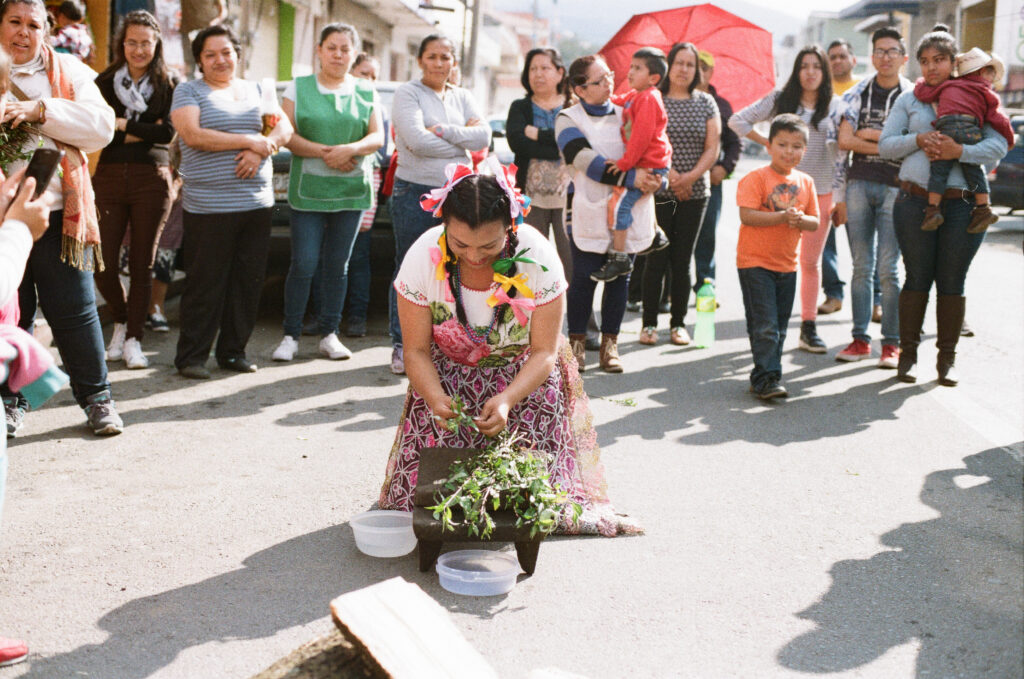
    One of the most emotional moments in Paracho’s celebrations is the Xirangua. During this dance, the couple, along with their godparents and parents, link arms and dance while being surrounded by family and friends.

    A close relative often performs a cleansing ritual using nurite branches to bless the attendees, ensuring protection and prosperity for the couple. This ancestral practice strengthens familial and communal ties and expresses wishes for harmony and well-being for the newlyweds.

    Purépecha weddings are a vibrant manifestation of Michoacán’s cultural richness, where each ritual and ceremony reinforces the identity and cohesion of indigenous communities. These traditions, passed down through generations, embody values of respect, collaboration, and unity that are essential to community life.
  • ¿De qué se trata eso del perdón? Bodas Purépechas

    Las bodas purépechas son ceremonias ricas en simbolismo y tradición, reflejando la profunda herencia cultural de las comunidades indígenas de Michoacán. Estos rituales, que pueden extenderse hasta por tres días, integran prácticas ancestrales que han perdurado a lo largo del tiempo, adaptándose a las particularidades de cada región y comunidad.

    El “robo” de la novia y la solicitud de perdón

    Algo que es muy común escuchar es “se la robaron”, una práctica que antes parecía mucho más común que ahora, pero que sigue vigente. Ahora la pareja decide escapar, pero normalmente, era un robo tal como se describe. Hemos escuchado muchas historias de mujeres de hace varias décadas que prácticamente fueron secuestradas y arrancadas de su hogar forzándolas a casarse. Tras esta acción, la familia del novio, acompañada por los padrinos, se dirige a la casa de la novia para solicitar el perdón de sus padres. Este acto no solo busca el consentimiento de la familia de la novia, sino que también establece una relación de respeto y unión entre ambas familias. Una vez otorgado el perdón, se acuerda la fecha de la boda y se inician los preparativos para las siguientes fases del ritual matrimonial.

    Pero claro que existe una práctica más sana: el pedimento. Una vez que la pareja llega al acuerdo de que decide casarse, papás y padrinos del novio lo acompañan a casa de la novia a solicitar la mano de la muchacha para formar un matrimonio. En cualquiera de los dos casos, cuando la respuesta de todos es positiva, se llevan los agradecimientos: una ofrenda de pan con la que se demuestra gratitud hacia la familia de la novia, y con la que la misma, hará la invitación a la próxima boda para sus amigos y familiares repartiendo este pan en los días siguientes. 

    Como dato curioso, hace algunos años platicando con la familia Caro de Paracho, comentaban que en la comunidad de Ahuiran es muy común que se solicite un pan especial para los agradecimientos, pero como con muchas otras costumbres, se tiende a competir y cada vez se piden más piezas de pan para ganarle al vecino. 

    La leña: símbolo de colaboración y compromiso

    En comunidades como Paracho, se lleva a cabo la ceremonia de la leña un día antes de la boda. Familiares y amigos del novio se organizan para cortar leña, la cual será utilizada en la preparación de los alimentos para la boda. Este gesto simboliza la disposición al trabajo y la colaboración comunitaria. Durante esta actividad, es común que los hombres sean desafiados a partir un tronco, demostrando su fortaleza y capacidad para sostener un hogar. Por su parte, las mujeres pueden ser invitadas a moler en el metate, evidenciando su habilidad en las labores domésticas. Estos desafíos también son realizados por los acompañantes, mostrando su apoyo y compromiso con la nueva pareja.

    Estos rituales son muy variados, hay datos que dicen que en diferentes comunidades encierran al novio en una habitación con mazorcas de maíz seco encendidas y especies que producen mucho humo para que el novio demuestre su virilidad resistiendo sin toser.

    La compostura y los preparativos previos a la boda

    La noche anterior a la boda se celebra la compostura, una reunión donde se ofrecen atole y tamales a las familias y amigos cercanos. Este encuentro fortalece los lazos entre las familias y prepara el ambiente para la ceremonia nupcial. En la mañana del día de la boda, es tradición que la familia del novio lleve el desayuno a la casa de la novia, acompañado del vestido nupcial. Este gesto simboliza el cuidado y la atención hacia la novia y su familia, asegurando que todo esté listo para la celebración. El desayuno suele incluir pan y chocolate o leche caliente, alimentos que representan la dulzura y la prosperidad que se desea para la nueva unión.

    La misa kuani y la fiesta comunitaria

    La ceremonia religiosa, conocida como misa kuani, es el núcleo de la celebración matrimonial purépecha. Durante la misa, los novios reciben la bendición y formalizan su unión ante la comunidad. Posteriormente, se lleva a cabo una fiesta donde se comparte el banquete tradicional. La música y el baile son elementos esenciales de la celebración, reflejando la alegría y el sentido de comunidad que caracteriza a las bodas purépechas.

    Y bueno, tampoco la bebida puede faltar. Hemos visto en diferentes comunidades que esto es además un detalle muy importante, no solo por la afición a la bebida en sí, sino porque el apoyo de amigos, vecinos y familiares, se ve reflejado muchas veces en la cantidad de bebida que se aporta para cada celebración.
    También es muy común que en algunos lugares, los invitados de los padrinos, lleven botellas o cervezas como medio, un apoyo para los padrinos quienes son los que realizan buena parte del gasto en las bodas. 

    A partir de ahí hay variedad de rituales según cada comunidad, como La bajada del pollo que pudimos ver en Tzintzuntzan o los muñecos de pan con quienes bailan los novios en algunas comunidades de la sierra. 

    La Xirangua: danza de bendición y unión

    Uno de los momentos más emotivos de la celebración en Paracho es la Xirangua, una danza en la que los novios, junto con sus padrinos y padres, bailan con los brazos entrelazados, mientras son rodeados por familiares y amigos. Durante la danza, una persona, generalmente un familiar cercano, utiliza ramas de nurite para “limpiar” y bendecir a los asistentes, asegurando la protección y la prosperidad de la nueva pareja. Esta práctica ancestral refuerza los lazos familiares y comunitarios, y es una manifestación de los deseos de bienestar y armonía para los recién casados.

    Las bodas purépechas son una manifestación viva de la riqueza cultural de Michoacán, donde cada ritual y ceremonia fortalece la identidad y la cohesión de las comunidades indígenas. Estas tradiciones, transmitidas de generación en generación, reflejan valores de respeto, colaboración y unidad, esenciales para la vida comunitaria.

    Para una visión más detallada de estas tradiciones, puedes consultar el artículo “Misa Kuani: la boda p’urhépecha y sus transformaciones históricas” disponible en SciELO México.

  • The Guitar Sings in Soledad

    The Weight of a Name

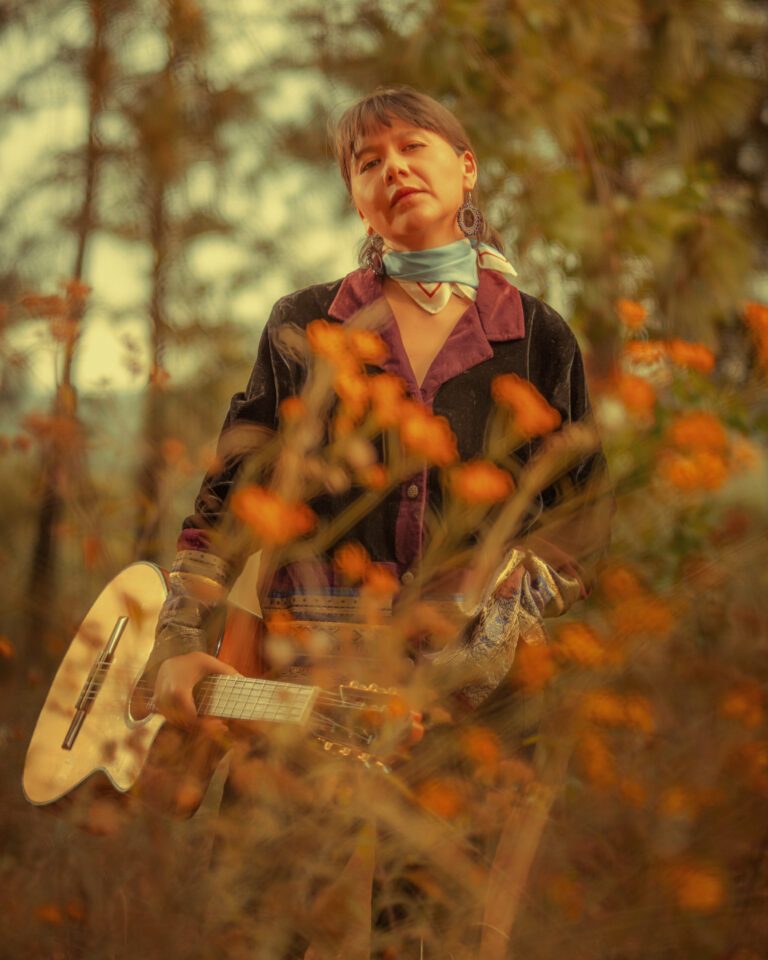
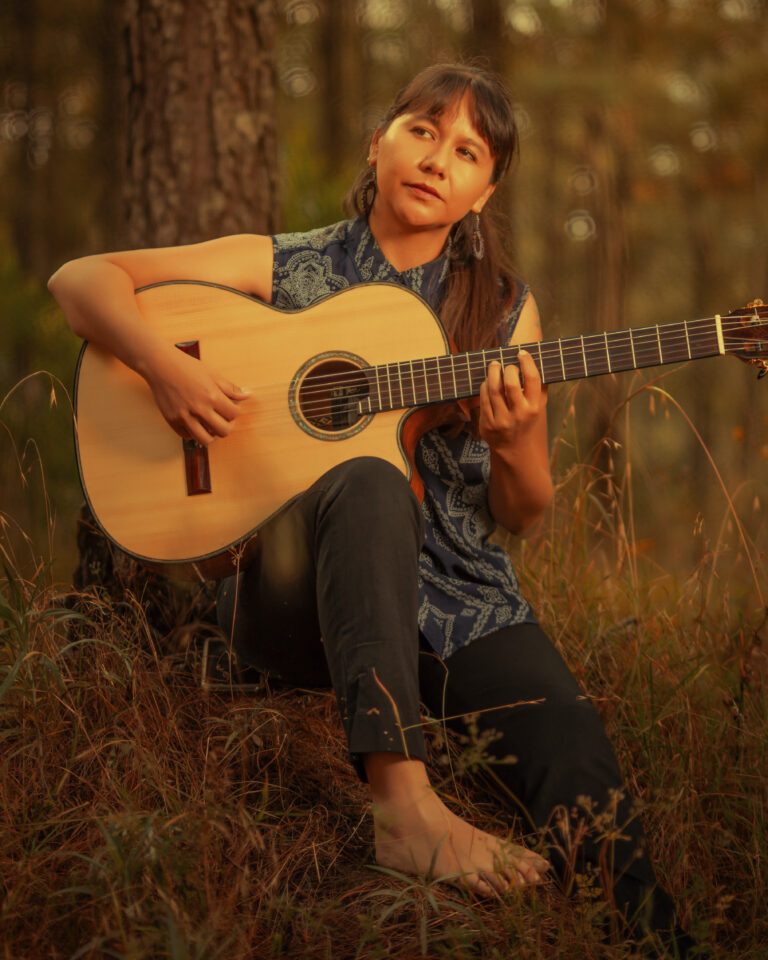
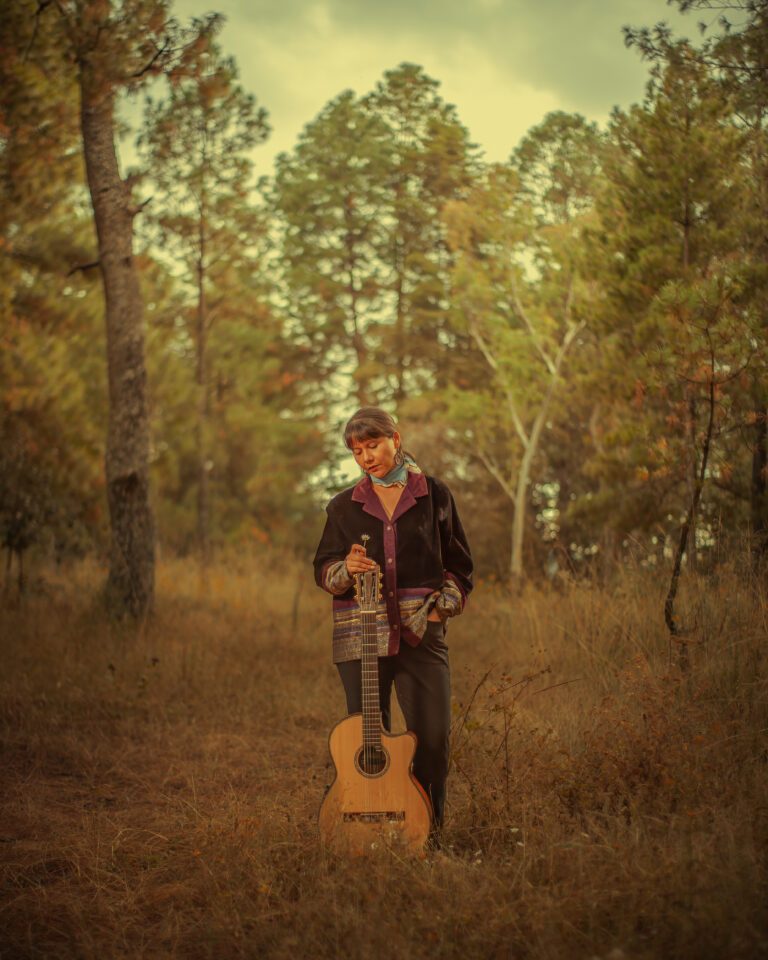
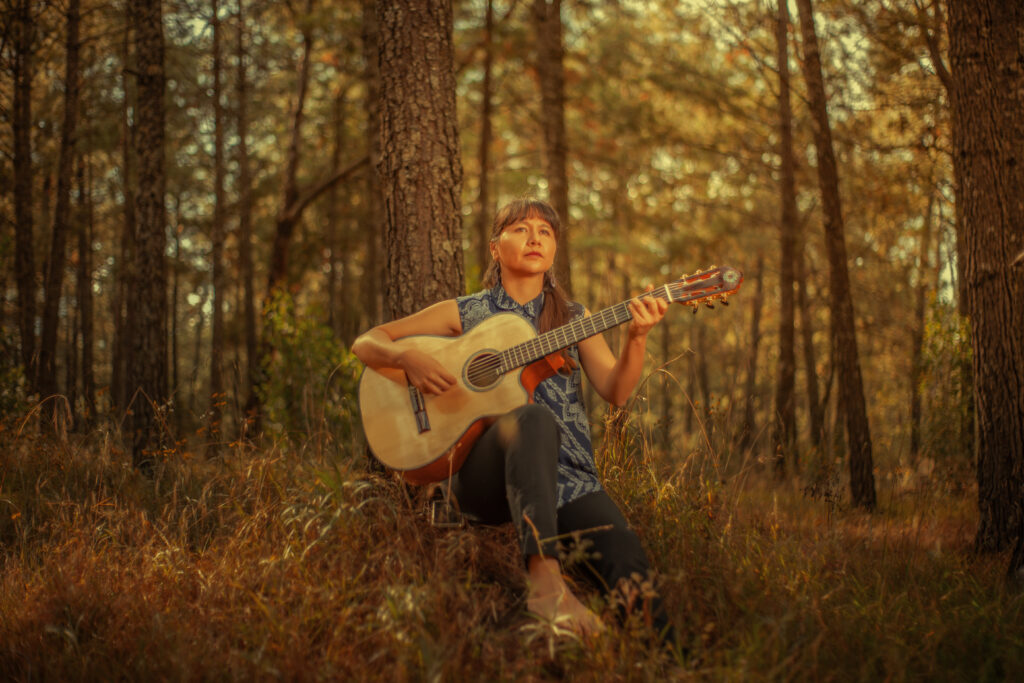
    Soledad Ulloa arrived in Morelia five years ago, bringing with her a guitar and a wealth of stories. When asked why she chose to call herself Soledad, she explains that it is her middle name, but she has adopted it as an act of introspection. “Soledad (Solitude) is not bad; it helps us distinguish and see the bigger picture.” Her name, like her music, is a way of inhabiting oneself, reconciling with loss, and finding strength in fragility.

    Soledad Ulloa
    La Guitarra canta en Soledad
    La Guitarra canta en Soledad
    La Guitarra canta en Soledad
    La Guitarra canta en Soledad


    The Voice of Nostalgia

    Soledad’s music is imbued with emotions that feel timeless. Influenced by Chilean cueca and Mexican ranchera music, her songs range from romantic to combative. In her melodies, nostalgia is not only a feeling but a starting point to tell the stories of what has been lived. I met her this year and later worked on the recording of Astro Brillante, a music video full of symbolism, dedicated to her sister Elizabeth and to those who have suffered losses.

    “Astro Brillante” is more than a song: it is an offering. Its release coincided with the anniversary of her sister’s passing, a September 11th that resonates not only in her life but also in the collective memory of her hometown.

    A session in Paracho

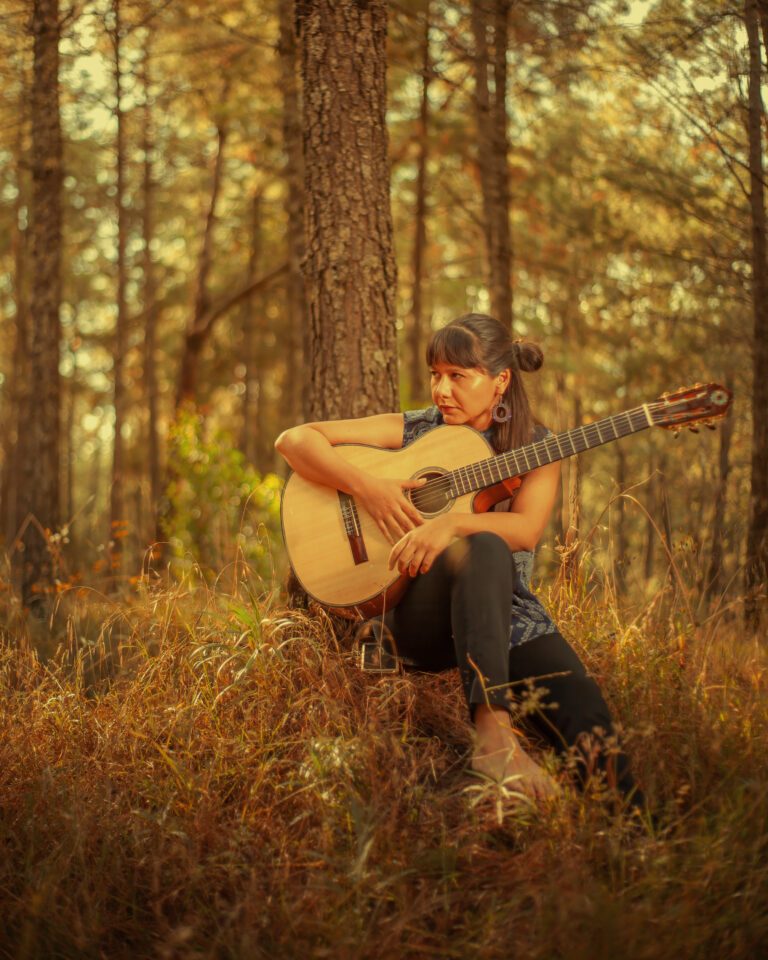
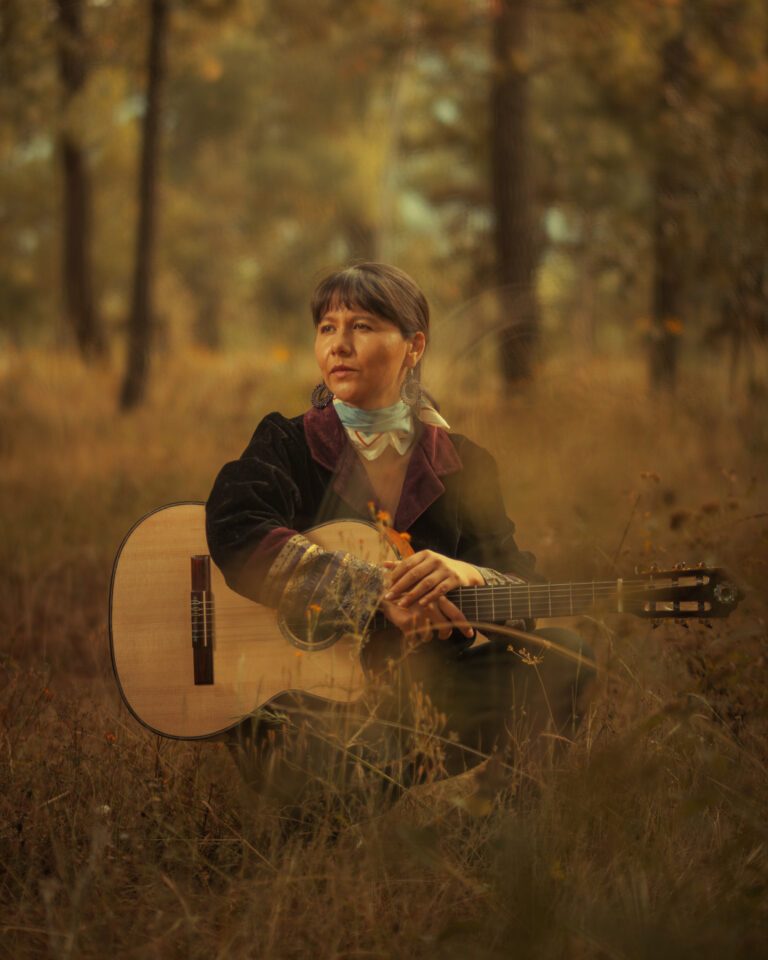
    For this edition of Kústakuni, we decided to work with Soledad again, recording a special session in Paracho, the heart of Michoacán’s guitars. The choice of location was not accidental. In the cold mountain air, her voice resonated with an authenticity that seemed to blend with the strings of her guitar.

    Her lyrics, full of protest and hope, found a perfect echo in the wood and mountains. In each chord, her Chilean roots intertwined with the strength of her present in Mexico.

    Singing to heal

    Soledad does not only sing; she creates to heal. Her upcoming album, Canto para Sanar, promises to be an intimate journey filled with symbols. On its cover, designed by @setornasol, the Copihue, Chile’s national flower, and Mexican votive candles coexist, symbols of rebirth, protection, and the connection between worlds.

    “We create to heal; there is no other reason,” says Soledad, and it is precisely this spirit that permeates her music. Through it, she invites introspection, inhabiting the losses, and finding strength in what was thought to be broken. It is clear: the guitar sings in Solitude.

    Sus letras, cargadas de protesta y esperanza, encontraron en la madera y las montañas un eco perfecto. En cada acorde, se entrelazaban sus raíces chilenas y la fuerza de su presente mexicano.

    Download audio files
    Soledad Ulloa

  • Petrichor

    This year has been a strange year, profoundly strange, one of those that seem heavier than all the others combined.
    For weeks we lived under a still sky, as if the sun, cruel and watchful, had decided to fix its gaze upon us to observe our despair. An infernal heat took hold of the days, suffocating, relentless. It tore away our spirits and revealed the worst in us, as if exhaling our frustration and cursing the thick air could offer us some relief, even if only illusory.

    For the first time in a long while, I was afraid. It was not a common fear, but an ancestral one—the fear of emptiness, of absence, of the possibility that the rains might never return. I imagined already living in a dry and barren world, a wasteland of dust where all that was green had turned to memory. I believed there would be no redemption, neither for me nor for any of us, but I also thought—selfishly, after all—that my suffering was unique, that I carried a weight on my shoulders that no one else could understand.

    Then, I prayed. Can you believe it? I, who have always mocked superstition, creeds, and prayers. There I was, on my knees, silently begging the mute sky, as if the voice of a broken man, a heretic like me, could pierce the heavens and summon the mercy of a storm. But the sun did not listen. Each day was a replica of the last: the dry and searing air, the dull gazes of those around me, the endless nights where sleep was a fleeting luxury, like a breeze that never arrives.

    And just when I thought hope had run out and that cruel fate would be our only companion, it happened. At first, it was but a few timid drops, as if they hesitated to touch the earth. Then, a roar from the horizon, a gust of wind filled with promises, and finally, the storm.

    What fury! It was as if the sky itself had decided to take revenge for our despair, to return to us all the weight of our prayers. The rains fell with such force that I thought the earth would crack in two. But in that violence, there was life. The dust faded away, the earth exhaled in relief, and within days, the paths were green once more. The air, now fresh and laden with moisture, was a balm for the senses. The birds returned with their songs, the crickets rose in a nocturnal symphony, and the trees… the trees seemed to raise their branches to the sky in a gesture of gratitude.

    And then you came, like a storm in the midst of my drought.

    I too, began to bloom.

    Violent, unexpected, overwhelming.
    I did not know what to do with the intensity of your presence, with the chaos you brought into my life. But with you, came the freshness, the life, the renewal. Your laughter was the rain soaking my dry skin; your voice, the river that quenched my thirst. I felt something within me overflow, how the sorrow, accumulated over the years, slipped through my cracks, leaving me light, renewed.

    Have you ever smelled the fragrance that rises when the earth is moistened after a long drought? They call it petrichor, and they say its essence comes from the blood of the gods spilled upon the stones. How poetic, right? But I wonder: what fragrance do the gods leave when they walk among mortals? Because what you leave in the air can be nothing other than divine. What is this essence of yours that has spilled over me? It is something deeper, something inexplicable, something that resists me yet invades me at the same time, something I cannot name, but long to explore.

    Since you arrived, I have begun to see the world with new eyes. The days are no longer a punishment; even the nights have a new light, as if the moon itself knows I am with you. And yet, I wonder: how is it possible that a storm can bring so much peace? How can someone, with all their force and fury, become a refuge?

    Perhaps I will never find the words to describe what you mean to me, but there is one thing I do know: you are my rain, my storm, my salvation. And I, like the earth after the drought, can do nothing but bloom.

    I hope that together, we will discover what we are. What new paths this water, now flowing through us, will carve. I hope, with all the humility of one who has known drought and the gratitude of one who has been saved by the rain, that this storm of ours never ceases.

    With all the emotion of one who has returned to life,
    Always yours.

  • I don’t know, I love you

    I love that which I cannot comprehend,
    and thou art, to me, a divine enigma.
    Do not fear to ask how much,
    for the “how much” is but a cage without keys,
    a bottomless abyss, endless in its call.
    Love hath no weight, no form,
    it is like the horizon:
    always present, yet always beyond.

    If only I could tell thee how I love thee,
    the words would fall like withered leaves.
    Numbers, those frail creatures of the mind,
    would lie spent upon the earth,
    unable to measure what is infinite.
    Not the grains of sand,
    nor the stars that flicker,
    nor the drops of the sea,
    could contain the vastness
    of what I feel.

    To what length might this love guide me?
    Perhaps to the edge of the roads,
    where the wind returns unto itself,
    where the sun rises for the first time,
    where the night surrenders its last shadow to dawn.
    And even there, at the world’s edge,
    thou wouldst find me with a simple word,
    so common that it seems unworthy of thee:
    I love thee.

    This clumsy tongue, so bound to the mundane,
    refuses to give me the perfect verb.
    Perhaps in some faraway tongue,
    there exists a sound that speaks of the very soul,
    something that embraces the ungraspable.

    But until that day,
    I cling to the hollow that we are,
    to this echo that cannot be filled,
    to the hope of finding that word tomorrow.
    And until then, keep asking how much,
    for with each question,
    I love thee more,
    and with each attempt at answer,
    the infinite draws closer.

  • In her eyes

    One must invent a word, true and grand,
    that captures what the eyes contain within,
    for though the gaze may seem to merely stand,
    it does much more: it wakes the soul from sin.

    In them, the world itself does pour and spill,
    love and hate, loneliness and fire’s flame,
    a mirror true of all humanity,
    a beacon in the fog, or fire that calls our name.

    What then do eyes do, if not to behold?
    They are the port where the soul finds its guide,
    and a book where the day’s journey is told.

    They are the key to life, to all its meaning,
    a deep sea, calm or filled with death’s wailing,
    that reveals the soul, and its quiet beating.

  • It’s not absence

    I don’t know if I should call it absence,
    when in every corner of this house
    you leave your shadow hanging.
    The air fills with your steps,
    even though I don’t hear them;
    and the walls whisper your name,
    without me asking them to.

    You’re not far.
    There’s no distance between the memory
    and the weight of your laugh,
    which stays here,
    as if it had made a nest.

    Your voice doesn’t fade,
    still wandering between the days,
    blending with my own thoughts,
    as if you were the thread that holds my silence.

    I don’t know if this is absence.
    How can I call it lack
    when you never fully leave?
    How can I feel emptiness
    when your presence settles
    like a dim light,
    that doesn’t seek to shine,
    but never ceases to be?

    You, who are not here,
    but always are.
    Every day you leave
    and at the same time you stay.
    No, this isn’t absence.
    It’s another way of being,
    one that knows no borders
    or bodies, or time,
    we are, because we have each other.


  • Do you think of me?

    Do you think of me
                 the way I think of you?
                             No, of course not.
    I’m certain you don’t.

    Your mind roams paths I’ll never know,
    wandering through the hills,
    chasing the shimmer of the horizon,
    where my eyes can’t even dream to reach.
    Your thoughts are vast,
                 like endless lands,
    while mine, instead,
                 have no destination but you.

    I don’t blame you.
                 This isn’t a reproach—it could never be.
                             I understand.
    Time slips through your hands,
    fleeting with the weighty things,
    those that truly matter in life.
    And I, I have so much time,
    so much, so empty,
    that I can fill it entirely with you.

    So here I am,
    searching for you in the words you left behind,
    turning them over like stones in a river.
    I take them,
                 I turn them,
                             I caress them.
                 I try to learn them,
    to chew them,
    to understand what you meant,
    if you meant anything at all.
    And all the while,
    you remain out there,
    somewhere I can’t reach,
    with no time to stop for me.

    But still, this isn’t a complaint—
    how could it be?
    I understand, lives aren’t lived the same for everyone.
    You have hands for the tangible,
    for what’s built and remains.
    And I, I have only dreams.
    Dreams and this yearning to
    drown you in words
    I don’t know if you’ll ever hear,
    to write you on paper
    you’ll never read.

    I know there are things inside you
    I can’t begin to grasp,
    things that slip away
    like water through fingers.
    But that doesn’t matter, either.
    I have time to spare.
    So much time that
    even the silences you leave behind,
    I’ve learned to fill with your absence.

    Sometimes I think
    you’re like the wind that blows
    but can’t be caught.
    You brush past me,
    leaving my hands cold,
    but you never stay.
    And I, like a fool,
                 stand still,
                             waiting,
    hoping that someday you’ll change course,
    that you’ll stop, if only for a moment.

    I wonder if you’ll ever stop.
    If one day, you’ll look back and see me there,
    waiting in the shadows.
    But maybe not even that.
    Perhaps my fate is to bear this waiting,
    this certainty that your steps won’t return,
    that your eyes are always set forward.

    And yet,
    I can’t let go of hope,
    foolish as it is.
    Because, even if you don’t want to,
    even if you never come back,
    I’ve planted you inside me
    like a tree.
    And no matter how tall you grow
    or how far your branches spread,
    I’ll stay here, tending to you
    from this distance you don’t even notice.

    There are days when I wonder if I made you up.
    If what I think you are
    is just my dream,
    a reflection I conjured to feel less alone.
    But then you reappear,
    like a ray of light
    breaking through the clouds,
    and everything hurts again,
    just as it always does.

    And even so,
    I have no regrets.
    Because even this pain you leave me
    keeps me alive,
    reminds me I’m here,
    waiting.
    So I ask myself:
    Do you think of me?


  • Wave

    I saw the ocean, deep blue and weightless,
                                      rising toward the shore.
    I watched that immense wave break upon the rocks,
                                      its fury spilling out,
    shattered into a billion fragments of defiance.
    In that moment,
    I felt small,
             minimal,
                   fragile,
                        wordless,
    my breath frozen in awe.
    A shiver,
              an omen,
    coursed through me.
    I thought of the power, so immense,
    required to move even a fraction of that force.
    I thought of the cold,
                                 the wind,
    the overwhelming weight of it all.
    I saw the flash
                  but had not yet heard the thunder.

    And all I could think of was you.
    I had seen this same force in your gaze,
    and though it was beautiful and terrifying,
    it was nothing compared to you.
    And no,
                   I do not fear you,
                             though surely I tremble.
    Because you are the sea,
                    the storm,
                                  the fire.
    You are magic,
           superstition,
                 the creed,
                       the miracle.
    You are cloud,
           lightning,
                 wind,
                       mist,
                             and ice.

    You are the moment that turns into tempest,
                       stopping everything,
                 staining everything.
    You are the roar that brings it all crashing down
    and the silence that follows the void.
    You are the mystery
    of what horizon?
    an abyss of light
           and shadow
                 that calls to me
                       and drowns me.

    There is no truce with you,
    nor do I want one.
    Because in your chaos
           I find order,
    in your fury,
                 the calm I do not seek
    but that finds me.
    You are the fire
           that consumes me
                 and shapes me,
                       the wave that crashes
           and rebuilds my borders.

    And even so,
    I cannot encompass you.
    You are everything and more.
    You are the earth’s cry,
    the sea’s whisper.
    And I, a mere witness,
    am lost in the vastness
                 of feeling small before you.

  • Rebozo II

    From the navel, sacred knot of life,
    a thread ascends to dance with the sun,
    woven in gold, in shadow, free of strife,
    a mantle embracing the heart as one.

    A subtle feather, spreading in its flight,
    like a flower spilling colors on the field,
    so too the rebozo, in its woven might,
    holds love in every thread it dares to yield.

    Oh, divine light, caressing as it glides,
    revealing skin, yet guarding it with care,
    a veil of joy where the soul resides,
    a warm embrace, Eden’s breath in the air.

    And in each strand the loom entwines with grace,
    dwells whispers of an ancient, timeless song,
    the hands’ soft hymn, which never leaves its place,
    weaving the rebozo, where art belongs.

    You who carry its weight, its tender plea,
    can you not hear the voices of the past?
    It’s feather, flower, light, and purity—
    the rebozo, eternal, in your soul held fast.